


The global printing industry has undergone a major transformation over the last decade, driven by the demand for faster production, superior print quality, and greater material versatility. Among the most influential innovations shaping this transformation is UV (Ultraviolet) ink technology. UV inks have become a preferred choice across commercial, industrial, and packaging applications due to their vibrant color output, instant curing, and compatibility with a wide range of substrates such as plastic, glass, metal, wood, and textiles.
Despite these advantages, UV ink technology introduces unique safety challenges that cannot be overlooked. Unlike conventional solvent-based or water-based inks, UV inks rely on chemical reactions triggered by ultraviolet light. This process involves specialized chemical components and high-energy UV radiation, both of which pose potential health, environmental, and operational risks if managed incorrectly.
For manufacturers, print shop owners, machine operators, and safety officers, understanding UV ink safety standards is not optional—it is essential. Regulatory compliance protects employees, prevents environmental harm, ensures consistent print quality, and safeguards long-term business operations. This article provides an in-depth, practical, and up-to-date exploration of UV inks, focusing on their composition, potential hazards, international safety standards, regulatory requirements, and best practices for safe and responsible use in modern printing environments.
Understanding UV Ink Technology
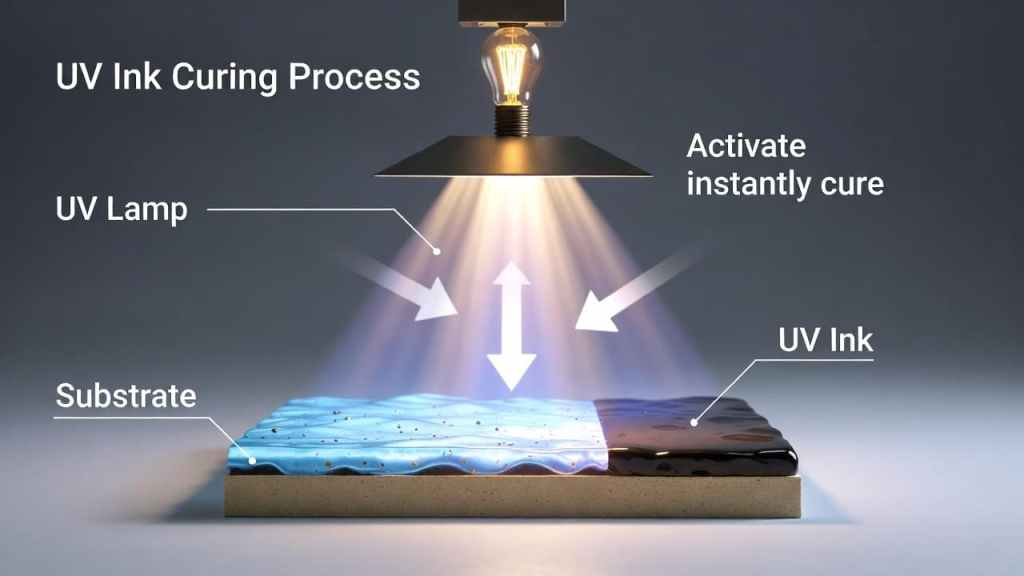
UV ink is a specialized type of ink that cures, or hardens, when exposed to ultraviolet light rather than drying through evaporation or absorption. When UV light hits the ink, it triggers a rapid chemical reaction known as photopolymerization, converting the liquid ink into a solid film almost instantly.
This instant curing process offers several operational advantages. Prints can be handled immediately without smudging, production speeds increase significantly, and ink sits on the surface of substrates instead of soaking in, resulting in sharper images and brighter colors. These characteristics have made UV inks especially popular in signage, industrial printing, packaging, and decorative applications.
However, the same chemical properties that make UV inks efficient also demand strict control measures. Uncured UV ink remains chemically active and potentially hazardous, and prolonged exposure to UV radiation can pose risks to human health. Understanding how UV ink works is the foundation for implementing effective safety standards.
Chemical Composition of UV Inks

To fully understand the safety implications of UV ink usage, it is important to examine its chemical makeup. UV inks are complex formulations designed to perform reliably under controlled UV exposure.
Monomers
Monomers are small reactive molecules that form the backbone of the curing process. When exposed to UV light, they link together to create a solid polymer structure. While essential for ink performance, many monomers can cause skin irritation or allergic reactions if they come into direct contact with the body before curing.
Oligomers
Oligomers are larger molecules that influence ink viscosity, flexibility, adhesion, and durability. They determine how the cured ink film behaves on different substrates. Like monomers, uncured oligomers can be hazardous upon skin contact or prolonged exposure.
Photoinitiators
Photoinitiators are the key drivers of UV curing. They absorb ultraviolet energy and initiate the chemical reaction that solidifies the ink. Some photoinitiators can release byproducts during curing, which may cause respiratory irritation or sensitivity if ventilation is inadequate.
Pigments and Additives
Pigments provide color, opacity, and lightfastness, while additives improve flow, adhesion, scratch resistance, and chemical durability. Although pigments are generally stable once cured, improper handling of raw ink formulations may still present health risks.
Potential Health and Safety Hazards of UV Inks
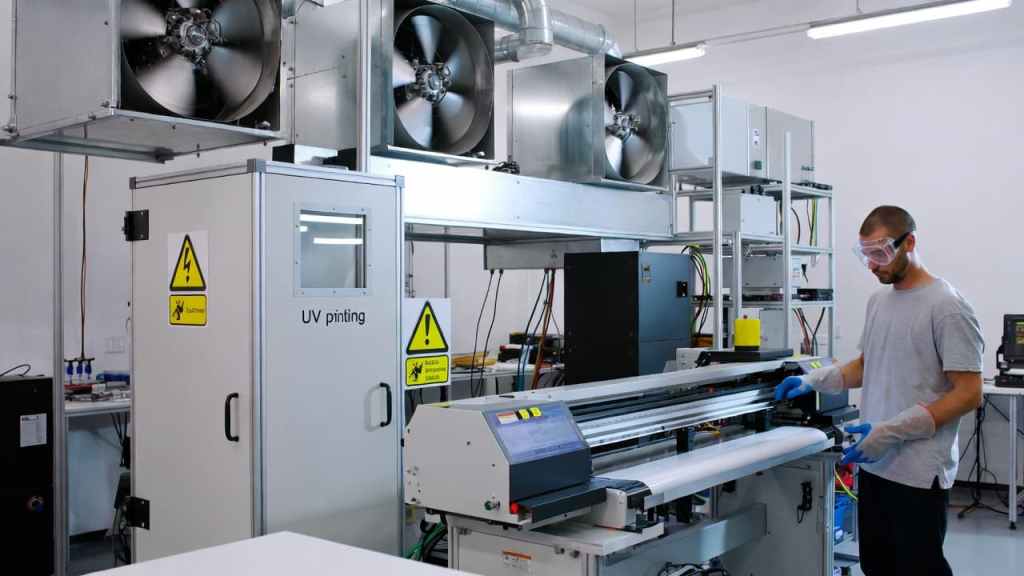
While UV inks are often marketed as cleaner alternatives to solvent-based inks, they are not entirely risk-free. Most safety concerns arise during handling, printing, and maintenance—particularly before the ink is fully cured.
Skin and Eye Exposure Risks
Direct contact with uncured UV ink can cause skin irritation, dermatitis, or allergic reactions. Repeated exposure increases the likelihood of sensitization, making even small future exposures problematic. Eye contact with liquid ink or splashes can result in redness, irritation, or more serious injury if not treated promptly.
Inhalation and Air Quality Concerns
Although UV inks emit fewer volatile organic compounds (VOCs) than traditional solvent inks, they may still release fumes or particles during printing and curing. Inadequate ventilation can lead to respiratory discomfort, headaches, or long-term health effects, particularly in enclosed or poorly ventilated spaces.
UV Radiation Exposure
UV curing systems emit high-intensity ultraviolet light. Direct or reflected UV radiation can damage the skin and eyes, potentially causing burns or long-term conditions such as photokeratitis. Protective shielding and proper machine design are critical to reducing this risk.
Fire and Chemical Reactivity
While UV inks are generally less flammable than solvent inks, they are still reactive chemical products. Improper storage, exposure to heat, or contamination with incompatible materials can create safety hazards within the workplace.
Environmental Impact of UV Ink Usage
UV inks are often promoted as environmentally friendly due to lower VOC emissions, but responsible use is still essential to minimize ecological impact.
Improper disposal of leftover ink, cleaning materials, or contaminated packaging can lead to soil and water pollution. Additionally, energy consumption from UV curing systems must be managed efficiently to reduce overall environmental footprint.
Modern sustainability standards encourage the use of low-migration inks, recyclable packaging, energy-efficient curing lamps, and proper waste management systems to align UV printing with environmental responsibility.
Regulatory Framework Governing UV Ink Safety
To address health, safety, and environmental concerns, various regulatory bodies have established guidelines and standards for UV ink usage. Compliance with these regulations is mandatory in many regions and beneficial worldwide.
Occupational Safety and Health Regulations
Workplace safety authorities require employers to identify chemical hazards, provide employee training, and implement protective measures. This includes clear labeling of UV ink products, accessible safety documentation, and enforced use of personal protective equipment.
International Safety and Quality Standards
Organizations such as ISO and ANSI provide standardized frameworks for occupational health, environmental management, and printing process safety. Adhering to these standards demonstrates commitment to quality, safety, and international best practices.
Material Safety Data Sheets (MSDS)
Manufacturers are legally required to supply MSDS documents for UV inks. These documents outline chemical composition, handling instructions, hazard identification, first aid measures, and disposal guidelines. Keeping MSDS readily accessible is a critical compliance requirement.
VOC and Environmental Regulations
Air quality regulations limit allowable VOC emissions, even for UV-based systems. Selecting low-VOC ink formulations and maintaining proper ventilation helps printing facilities meet these requirements while supporting sustainability goals.
Best Practices for Safe UV Ink Handling and Operation
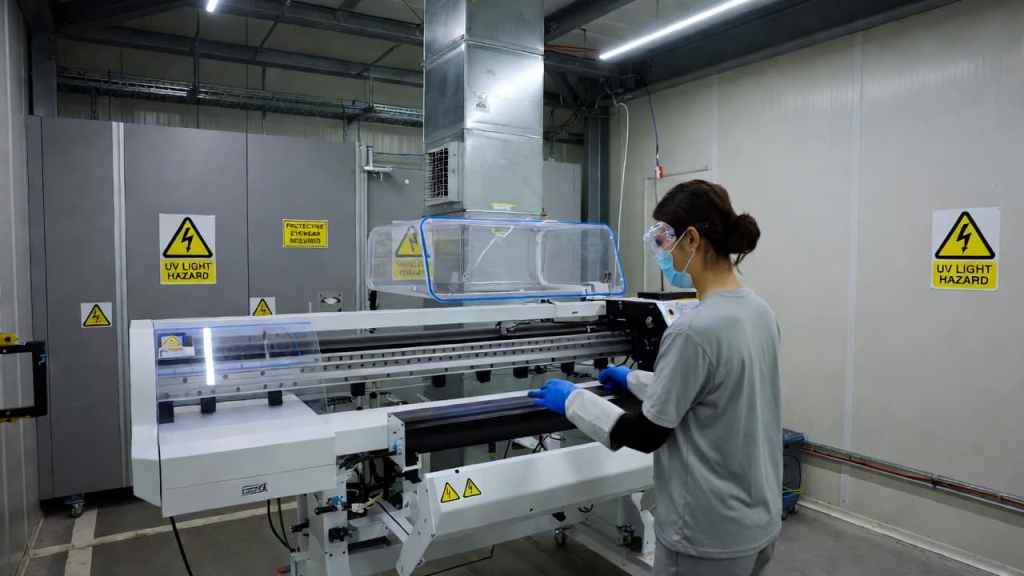
Implementing structured safety practices significantly reduces risk and improves overall operational efficiency.
Personal Protective Equipment (PPE)
Operators should wear chemical-resistant gloves, protective eyewear, and suitable work clothing when handling UV inks. PPE acts as the first line of defense against accidental exposure.
Effective Ventilation Systems
Proper airflow and exhaust systems reduce airborne contaminants and maintain acceptable indoor air quality. Localized extraction near curing units is particularly effective.
Training and Awareness Programs
Regular training ensures employees understand UV ink hazards, correct handling techniques, emergency procedures, and equipment operation. Well-informed staff are essential for accident prevention.
Safe Storage and Labeling
UV inks should be stored in sealed containers, away from direct sunlight and heat sources. Clear labeling prevents misuse and ensures quick identification during emergencies.
Spill Response and Waste Management
Facilities should maintain spill kits and follow MSDS-recommended procedures for containment and cleanup. Waste materials must be disposed of according to local environmental regulations.
UV Ink Safety in Specialized Applications
Different printing sectors face unique safety considerations when using UV inks.
Packaging and Label Printing
In packaging applications, especially those related to food and pharmaceuticals, low-migration UV inks are essential to prevent chemical transfer. Strict curing controls and compliance testing are required.
Industrial and Decorative Printing
Printing on rigid or non-porous substrates often requires higher curing energy. Proper shielding and equipment calibration are critical to protect operators from UV exposure.
Commercial and Signage Printing
High-volume production environments benefit from automated systems, but routine inspections and maintenance remain vital for long-term safety.
Future Trends in UV Ink Safety and Technology
Ongoing research continues to improve the safety profile of UV inks. Innovations include LED UV curing systems that emit less heat and radiation, bio-based ink components, and enhanced low-migration formulations.
As regulations evolve and sustainability expectations increase, UV ink manufacturers and printing businesses must remain proactive, adapting processes and equipment to meet future safety and environmental standards.
Conclusion
UV ink technology has redefined modern printing by delivering unmatched speed, quality, and material versatility. However, these benefits come with responsibilities. Understanding UV ink composition, recognizing potential hazards, and adhering to established safety standards are essential for protecting workers, ensuring regulatory compliance, and maintaining sustainable operations.
By following best practices—such as proper training, adequate ventilation, PPE usage, and responsible waste management—printing facilities can safely harness the advantages of UV inks while minimizing risks. A commitment to safety is not only a legal obligation but also a strategic investment in long-term productivity and trust within the printing industry.explore our high-quality UV printers here
Frequently Asked Questions (FAQ)
What are UV inks commonly used for?
UV inks are widely used in signage, packaging, labels, industrial printing, promotional materials, and decorative applications due to their fast curing and high print quality.
Are UV inks safe for food-related packaging?
UV inks can be safe for indirect food contact when low-migration formulations are used and all regulatory requirements are met. Always verify compliance certifications.
How can printing facilities ensure UV ink safety compliance?
Facilities should provide employee training, maintain proper ventilation, follow MSDS guidelines, use PPE, and conduct regular safety audits.
What should be done in case of a UV ink spill?
Spills should be contained immediately using appropriate absorbent materials, cleaned according to MSDS instructions, and reported to supervisory personnel.
Do UV inks harm the environment?
When managed responsibly, UV inks have lower environmental impact than solvent-based inks. Proper disposal and energy-efficient curing systems further reduce ecological risks.
Recommended MTuTech Resources
Use these related pages to compare equipment choices and continue researching the right production setup.
- UV printer – compare machine options, applications, and production fit.
- UV printer 9060 – compare machine options, applications, and production fit.
- Visual Positioning UV Printer – compare machine options, applications, and production fit.
- Cylinder Uv printer – compare machine options, applications, and production fit.
- UV Printer articles – read more guides in this topic cluster.
- MTuTech Blog – browse more UV, DTF, textile, and production workflow resources.
UV Ink Safety Standards and Best Practices in Modern Printing: Practical Buying Notes
For buyers comparing a uv printer, the important question is not only whether the machine can print. The stronger question is whether the full workflow can repeat the same result every day with acceptable cost, operator time, and service support. This is where print samples, material testing, and a clear production plan become more useful than a simple feature list.
Use this topic as part of the MTuTech knowledge cluster for uv printer. It should help a shop owner, production manager, or sourcing team understand where the printer fits, which questions to ask, and which product page to review next.
What to Verify Before Shortlisting a Machine
- Match the printer to the exact products, substrates, and order sizes you plan to sell.
- Request sample prints using real artwork, real materials, and realistic finishing requirements.
- Estimate ink, media, labor, rejected pieces, maintenance, and downtime before judging ROI.
- Check training, spare parts, installation support, software workflow, and after-sales response.
- Review workspace needs such as power, ventilation, curing, pretreatment, and packing flow.
Best Internal Resources
These MTuTech pages are the best next step for readers who want to move from research to machine comparison:
- UV printer – compare specifications, applications, and production fit.
- Direct to fabric printer – compare specifications, applications, and production fit.
- Visual Positioning UV Printer – compare specifications, applications, and production fit.
- MTuTech Blog – browse related UV, DTF, DTG, textile, and production workflow guides.
Quick Decision Table
| Area | Why it matters | Buyer check |
|---|---|---|
| Application fit | Confirms the printer matches the jobs you want to sell | Test the most common products first |
| Production cost | Protects margin on repeat orders | Include ink, media, labor, waste, and maintenance |
| Output quality | Reduces complaints and reprints | Review adhesion, detail, color, wash/durability, and finish |
| Support | Keeps the machine productive after installation | Ask about training, parts, response time, and troubleshooting |
FAQ
Which keyword does this guide support?
This post supports searches around uv printer together with application, cost, comparison, and troubleshooting queries related to uv printer.
Which page should readers visit after this article?
The strongest next step is the most relevant MTuTech product page listed above. That gives readers a direct path from education to machine comparison.