


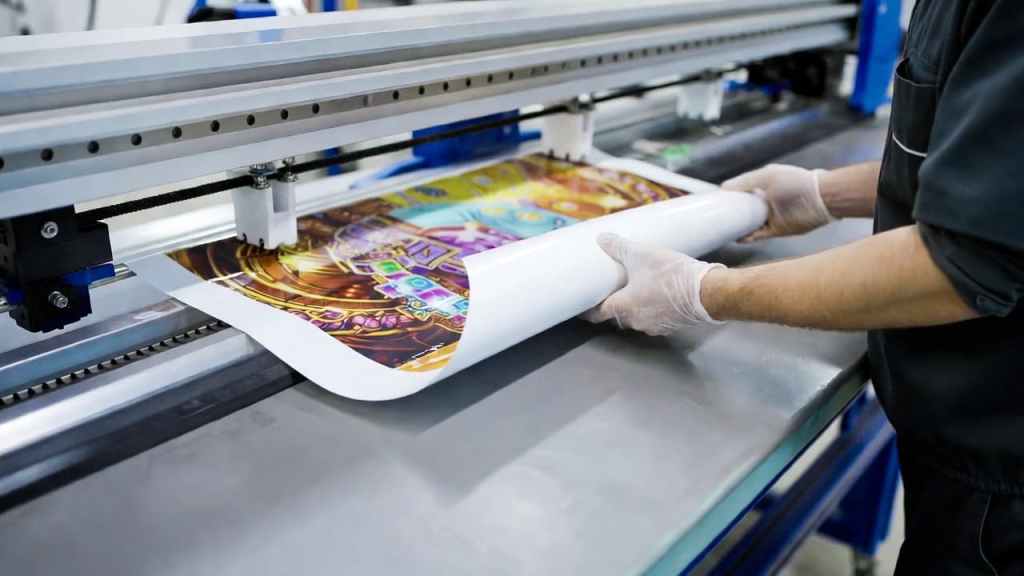
UV Direct-to-Film (UV DTF) printing has quickly become one of the most talked-about innovations in industrial and commercial printing. From branding machine panels to decorating industrial equipment, businesses are exploring new ways to apply durable graphics to complex surfaces. One of the most common questions manufacturers and print professionals ask is: Can UV DTF be used on moving mechanical parts?
This in-depth durability study explores whether UV DTF prints can withstand motion, friction, vibration, and environmental stress. We’ll examine how the technology works, what affects performance on dynamic components, and which materials deliver the best results. If you’re considering UV DTF for mechanical applications, this guide will help you make an informed decision.
What Is UV DTF Printing?
UV DTF (Ultraviolet Direct-to-Film) printing is an advanced transfer-based printing method that combines UV-curable inks with a film transfer system. Unlike traditional surface printing techniques, UV DTF allows designs to be printed onto a special release film, cured instantly with UV light, and then transferred onto a target surface.
How the UV DTF Process Works
1. Ink Application
Specialized UV-curable inks are printed onto a release film. These inks are designed to bond strongly with adhesives and cure instantly under UV light.
2. UV Curing
The ink is exposed to ultraviolet light immediately after printing. This curing process hardens the ink instantly, creating a durable and vibrant design layer.
3. Adhesive Layering
An adhesive layer is applied to ensure strong bonding when transferred to the final substrate.
4. Transfer to Surface
The film is pressed onto the desired object. Once properly bonded, the film is peeled away, leaving the design adhered to the surface.
This process enables application on flat, curved, and even slightly textured surfaces—making it highly versatile for industrial use.
Why UV DTF Is Gaining Popularity in Industrial Applications
UV DTF printing is not just popular for decorative purposes. It’s increasingly used in industrial settings due to several performance advantages.
Key Benefits of UV DTF Printing
1. Vibrant, High-Resolution Output
UV inks produce sharp detail and rich colors. Even fine text and intricate graphics remain crisp after transfer.
2. Instant Curing
Because UV inks cure immediately under UV light, production speed increases significantly. There’s no waiting time for drying.
3. Strong Chemical Resistance
UV prints resist exposure to oils, mild solvents, and cleaning chemicals commonly used in industrial environments.
4. Scratch and Abrasion Resistance
When properly applied, UV DTF prints offer solid resistance to scratching and surface wear.
5. Broad Material Compatibility
UV DTF adheres to plastics, metals, glass, coated wood, and composite materials.
6. Eco-Conscious Ink Options
Many modern UV inks are formulated with low VOC emissions, making them safer for operators and environmentally responsible.
These advantages make UV DTF attractive for branding machinery, labeling components, customizing control panels, and marking industrial equipment.
But how does it perform when applied to moving parts?
The Core Question: Can UV DTF Withstand Motion?
Applying graphics to stationary surfaces is one thing. Applying them to moving mechanical parts introduces entirely new challenges.
Mechanical components often experience:
- Continuous motion
- Vibration
- Friction
- Heat buildup
- Moisture exposure
- Repetitive stress
These conditions can gradually weaken adhesion or damage surface coatings. Therefore, durability becomes the central concern.
To evaluate UV DTF’s performance in such scenarios, several factors must be analyzed.
Factors That Influence Durability on Moving Parts

1. Substrate Material
The base material plays a major role in determining adhesion strength and long-term durability.
- Plastics vary widely in surface energy. Some plastics allow strong bonding, while others require primers.
- Aluminum offers a stable, smooth surface that bonds well with adhesives.
- Steel provides high structural rigidity, reducing flex-related stress on prints.
- Composite materials may behave unpredictably depending on surface treatment.
Higher surface energy materials generally result in stronger adhesion.
2. Surface Preparation
Improper preparation is one of the main causes of print failure.
For optimal results:
- Remove oil, grease, and dust.
- Use isopropyl alcohol cleaning.
- Lightly abrade glossy metal surfaces if needed.
- Apply primers when recommended for low-energy plastics.
A well-prepared surface dramatically improves bond strength and longevity.
3. Type of Mechanical Movement
Not all movement is equal.
- Rotational movement (e.g., knobs, rollers) may cause consistent surface friction.
- Sliding movement introduces abrasion.
- Vibrational movement can weaken adhesive over time.
- Flexing parts create micro-cracks in rigid prints.
Continuous high-frequency motion causes more wear compared to intermittent movement.
4. Environmental Exposure
Environmental conditions accelerate deterioration.
- High heat can soften adhesives.
- Moisture may weaken bonding on certain plastics.
- UV exposure can cause fading over time.
- Industrial chemicals may degrade the ink surface.
Understanding the operating environment is critical before applying UV DTF to mechanical components.
Durability Testing Methodology

To evaluate real-world performance, controlled durability tests were conducted on three commonly used materials:
- Plastic
- Aluminum
- Steel
Step 1: Sample Preparation
Each substrate was cleaned and prepared according to recommended industry standards to ensure consistent results.
Step 2: UV DTF Application
Identical UV DTF prints were applied to each material following manufacturer guidelines. Pressure and transfer time were kept consistent.
Step 3: Dynamic Motion Simulation
Samples were subjected to continuous movement cycles simulating mechanical operation. Movement included rotational and vibrational stress testing.
Step 4: Environmental Stress Testing
The samples were exposed to:
- Elevated temperature cycles
- Moisture exposure
- UV light simulation
Performance was monitored over time to assess adhesion, wear, and visual degradation.
Test Results and Performance Analysis

The durability tests revealed important differences between substrate types.
Performance on Plastic Substrates
Plastic showed moderate adhesion overall.
Observations:
- Gradual surface scuffing occurred under continuous friction.
- Minor color fading was observed after prolonged UV exposure.
- High-frequency movement caused micro-cracking in some samples.
- Adhesion remained acceptable on rigid plastics but weaker on flexible plastics.
Conclusion:
UV DTF works on plastic, but durability depends heavily on plastic type and surface treatment. Additional primers may improve long-term results.
Performance on Aluminum Parts
Aluminum delivered significantly stronger performance.
Observations:
- Excellent adhesion strength.
- Minimal abrasion even after extended motion cycles.
- No visible cracking under vibration testing.
- Strong resistance to moisture exposure.
Conclusion:
Aluminum is highly compatible with UV DTF printing, even for moving components with moderate mechanical stress.
Performance on Steel Components
Steel produced the best durability results overall.
Observations:
- Superior adhesion retention.
- No cracking under high-frequency vibration.
- Minimal surface wear.
- Excellent resistance to environmental exposure.
Conclusion:
Steel substrates offer ideal conditions for UV DTF applications on moving parts due to structural rigidity and stable surface properties.
Common Failure Points on Moving Mechanical Parts
Even though UV DTF performs well on certain materials, it’s important to understand potential failure points.
1. Edge Lifting
Edges of the print may peel if exposed to repeated friction or poor adhesion during transfer.
2. Surface Abrasion
Parts that rub against other components may experience gradual ink wear.
3. Heat-Induced Softening
Prolonged exposure to high temperatures can weaken adhesives.
4. Flex Cracking
Rigid UV layers may crack if applied to flexible parts that bend frequently.
Proper design placement can reduce these risks significantly.
When Is UV DTF Suitable for Moving Parts?
UV DTF is suitable when:
- The part experiences light to moderate movement.
- The surface is rigid and properly prepared.
- There is minimal direct friction contact.
- The operating temperature remains within moderate limits.
- The design is not placed on high-impact areas.
It may not be ideal for:
- High-speed friction components.
- Constantly flexing rubber parts.
- Extreme heat environments.
- Heavy abrasion zones.
Practical Industrial Applications
UV DTF printing can be successfully used in:
- Rotating control knobs
- Machine housing panels
- Metal levers
- Tool handles
- Equipment branding plates
- Mechanical covers
For internal gears or high-friction shafts, alternative marking methods such as laser engraving may be more appropriate.
How to Improve UV DTF Durability on Mechanical Parts
If you plan to apply UV DTF on moving components, consider these best practices:
Use High-Quality UV Inks
Premium inks provide better chemical and scratch resistance.
Choose the Right Substrate
Metals like aluminum and steel outperform most plastics.
Apply Surface Primers
Primers improve adhesion on low-energy plastics.
Avoid High-Friction Zones
Place designs where there is minimal direct contact.
Add Protective Coatings
Clear protective topcoats can enhance abrasion resistance.
Conduct Real-World Testing
Always test a sample under actual operating conditions before mass production.
How Long Do UV DTF Prints Last on Moving Parts?
The lifespan varies depending on:
- Substrate type
- Frequency of movement
- Environmental exposure
- Surface preparation quality
On aluminum and steel with moderate movement, prints can last several months to multiple years. On plastics exposed to frequent friction, durability may be reduced without protective measures.
Are UV DTF Prints Waterproof and Heat-Resistant?
UV DTF prints are generally water-resistant and handle moderate temperature fluctuations well. However:
- Continuous water exposure may weaken adhesion over time.
- Extreme heat can soften adhesive layers.
- Industrial solvents may degrade the print surface.
Always evaluate the operational environment before application.
Final Verdict: Is UV DTF a Reliable Option?
Yes—UV DTF printing can be a reliable solution for moving mechanical parts when applied correctly and on suitable materials.
The key takeaway from durability testing is clear:
- Steel performs best.
- Aluminum delivers excellent results.
- Plastics require additional preparation and caution.
While UV DTF is not designed for extreme mechanical wear or high-friction internal components, it performs exceptionally well for branding, labeling, and decorative applications on moderately moving parts.
With proper material selection, surface preparation, and testing, UV DTF can offer a long-lasting, visually striking solution for industrial and mechanical environments.
Frequently Asked Questions (FAQ)
Can UV DTF handle extreme temperatures?
UV DTF prints tolerate moderate temperature changes. However, prolonged exposure to extreme heat may reduce adhesive strength. Always test under real operating conditions.
How durable is UV DTF under constant movement?
Durability depends on material type and movement intensity. On rigid metal surfaces with moderate motion, UV DTF can last years.
Is UV DTF suitable for outdoor mechanical equipment?
Yes, but additional UV-resistant coatings may improve long-term color retention.
Does substrate type affect print quality?
Absolutely. Metals typically provide better adhesion and color stability than low-energy plastics.
Should UV DTF replace engraving for mechanical parts?
Not necessarily. For high-friction or load-bearing components, engraving or laser marking may offer superior permanence.

Conclusion
UV DTF printing opens new possibilities for customizing and branding mechanical components. While it performs exceptionally well on rigid metal parts like aluminum and steel, caution is necessary when applying it to plastics or high-friction areas.explore our high-quality UV DTF printers here.
If your mechanical parts experience light to moderate motion and are properly prepared, UV DTF can provide a durable, vibrant, and professional finish. As with any industrial process, testing and material compatibility remain the foundation of long-term success.
By understanding the limits and strengths of UV DTF technology, manufacturers can confidently integrate it into modern mechanical applications while ensuring durability and performance.
Recommended MTuTech Resources
Use these related pages to compare equipment choices and continue researching the right production setup.
- UV DTF printer – compare machine options, applications, and production fit.
- UV printer – compare machine options, applications, and production fit.
- UV printer 9060 – compare machine options, applications, and production fit.
- Visual Positioning UV Printer – compare machine options, applications, and production fit.
- UV-DTF Printer articles – read more guides in this topic cluster.
- MTuTech Blog – browse more UV, DTF, textile, and production workflow resources.